


Collective Insights
Collective Insights captures the voices and ideas driving change in mining, led by the collective influence of Femina.
Written reflections from Femina Founder and CEO Beth Borody explore connection, ownership, and the evolving experience of women in mining.
Hosted by Peggy Bell, The Changing Face of Mining series features the voices of women leading transformation across the industry.
Together, these insights capture the movement redefining what it means to lead, invest, and build community through Femina.

The Hidden Costs of Pushing Yourself Too Hard in the Mining Industry
New Blog - The Hidden Costs of Pushing Yourself Too Hard In The Mining Industry

Have you ever found yourself saying, "I am so tired," "I am sick and can't seem to get better," or "I feel so run down"? If so, you are not alone. As women in the mining industry, we push ourselves to the limit every day. We strive to show up in our professional and personal roles, often at the expense of our own health, relationships, and other aspects of our lives. The mining industry is an all-encompassing world that requires us to be on our toes at all times. The constant urgency to prioritize, travel, and work long hours can take a toll on our physical and emotional well-being.
In this blog post, we will explore the hidden costs of pushing ourselves too hard in the mining industry. We will discuss how burnout and exhaustion impact us, the importance of taking a break, and how to redefine expectations in the industry.
One of the hidden costs of pushing ourselves too hard in the mining industry is burnout. Burnout is a state of physical, emotional, and mental exhaustion caused by prolonged stress. It is a common experience in the mining industry, where it can feel like urgent priorities and long hours are the norm. The consequences of burnout are dire. It affects our productivity, our relationships, and our overall well-being. Never underestimate the physical and emotional toll of constantly running on empty.
Another hidden cost of pushing ourselves too hard is our inability to take a break. We often forget that downtime and rest are essential for our physical and emotional health. Taking a mental or physical break from the industry can help us recalibrate, gain new perspectives, and reduce stress levels. Encourage yourself and your colleagues to take a mindful break every now and then. By doing so, you can prevent burnout and improve your overall well-being.
To redefine expectations in the mining industry, we need to prioritize balance. Yes, it is important to be productive, efficient, and meet deadlines, but it doesn't mean that you should sacrifice your well-being. Sustainable success is a better measure for long-term productivity than burning out after a few years. As women in the mining industry, we have to learn to set reasonable boundaries, prioritize self-care, and allow ourselves to take a break when we need it.
In conclusion, pushing ourselves too hard in the mining industry has hidden costs that can affect us in the long run. Burnout and exhaustion can take a toll on our physical and emotional well-being, while our inability to take a break can lead to chronic stress and unhappiness. If we want to redefine expectations in the mining industry and ensure that future generations of women can thrive in this world, we need to prioritize balance, self-care, and realistic expectations. Allowing ourselves and others in the industry to take a break when we need it can take us a long way towards a sustainable and fulfilling career in the mining industry.
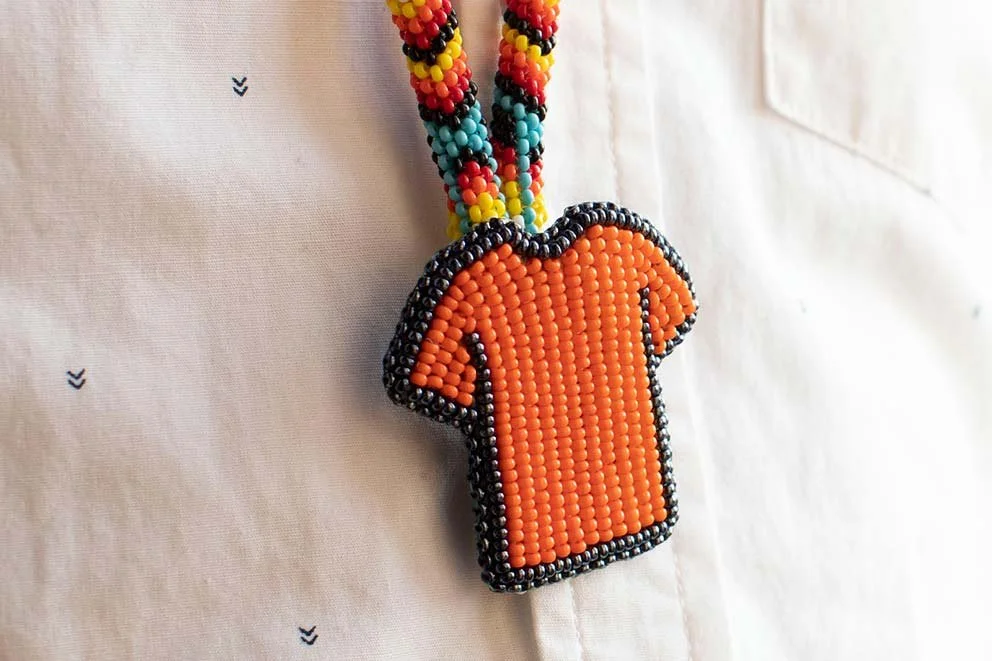
National Truth & Reconciliation Day
My name is Korah De Walt-Gagnon, and I am an inter generational residential school survivor, a member of the Tk’emlups te Secwepemc, and a mother to 3 beautiful children. As an Indigenous woman, National Truth and Reconciliation Day holds a profound significance in my life. It's a day when I reflect on my personal journey from shame and self-doubt to embracing my cultural heritage with pride. It's also a day when I'm reminded of the critical work ahead – educating others to break down bias and misconceptions, ultimately striving for a stronger and more united future for all Canadians because #everychildmatters.
Growing up as an Indigenous girl, I carried a heavy burden of shame. I felt the weight of stereotypes and misconceptions that surrounded my culture. The derogatory labels and misconceived notions about my people cast a dark cloud over my self-esteem and identity. It was as if society expected me to conform to a distorted image of who I should be rather than embracing my true heritage. As a child, I learned that saying I lived down the road from one development in the city was more accepted by adults than saying I lived on the reserve. My skin colour is pale, so I had the privilege of not being stereotyped by the colour of the skin, however, when others found out, I found children made fun of the Indigenous culture and adults passed judgements or assumptions were made.

National Truth and Reconciliation Day, established to honour the survivors of residential schools and acknowledge the deep-seated trauma inflicted upon Indigenous communities, represents a turning point in my life. It's a day of reflection, remembrance, and, most importantly, a day of healing. As I began to learn more about the history and impact of residential schools, it was impossible to ignore the scale of the injustice done to Indigenous peoples. The pain of those who suffered in silence for generations was a painful revelation, but it also ignited a fire within me – a determination to reclaim my heritage and help others understand the truth.
My journey from shame to acceptance was not easy, but it was necessary. It began with a female workshop, one where I allowed myself to be vulnerable with my shame during a breakout activity. Through that experience I left knowing that I can be Indigenous, I can be female, and I can work in the mining industry, but I am enough. Acknowledging the beauty and resilience of my culture and finding strength in the traditions and stories passed down through generations. Healing came as I embraced who I am and showed up as my authentic self.
Breaking down bias and misconceptions is a crucial part of the reconciliation process. To foster understanding and unity, I've taken it upon myself to educate others about Indigenous culture and history. This involves challenging stereotypes, dispelling myths, and engaging in open and honest conversations. It’s important to remember that ignorance breeds prejudice, and prejudice perpetuates injustice. By sharing our stories and our truths, we can dismantle the walls of misunderstanding that have separated Indigenous and non-Indigenous peoples for far too long. Education is a bridge to empathy, compassion, and ultimately, reconciliation.

National Truth and Reconciliation Day is not just about remembering the past; it's about shaping our future. As Indigenous people, we have a rich cultural heritage to share, and as Canadians, we have a responsibility to listen and learn. By coming together, acknowledging the pain of the past, and actively working to bridge divides, we can build a stronger, more inclusive, and more united Canada. The path to reconciliation is not without its challenges, but it's a path worth walking, hand in hand, towards a brighter and more harmonious future.
National Truth and Reconciliation Day represents a pivotal moment in my journey from shame to pride, from self-doubt to self-acceptance. It's a day that reminds me of the power of education, understanding, and unity in breaking down bias and misconceptions. Together, as Indigenous and non-Indigenous Canadians, we can build a stronger future rooted in truth, reconciliation, and respect for all.
What can you do? Many Indigenous people are using their voices and sharing their stories, take the time to register for courses, seminars, and workshops. Support them in their own personal healing journey, while also embarking on your journey of reconciliation.

Flipping the Employment Deficit Conversation
The mining sector has a dwindling talent pipeline. We know this, we discuss this, and we often talk about solving this. Our conversations at association meetings, conferences, and in our teams are often directed at how we are going to employ enough people today to meet our supply and demand needs of tomorrow and how the education programs for geoscience and engineering are becoming watered down or worse, are at risk of cancellation.
These are real concerns and valid conversations. These are conversations that, as a sector, require cross-collaborative solutions. As I am forever the out-of-the-box problem solver, I propose another perspective. Keep reading to find out what it is.

The mining sector has a dwindling talent pipeline. We know this, we discuss this, and we often talk about solving this. Our conversations at association meetings, conferences, and in our teams are often directed at how we are going to employ enough people today to meet our supply and demand needs of tomorrow and how the education programs for geoscience and engineering are becoming watered down or worse, are at risk of cancellation.
These are real concerns and valid conversations. These are conversations that, as a sector, require cross-collaborative solutions. As I am forever the out-of-the-box problem solver, I propose another perspective.
We need to attract more communicators to the sector.
Communicators focus on developing messaging, creating alliances, and creating synergies. We naturally look at problems from different angles, and due to our nature, we talk a lot. We distill the technical into the accessible and create relationships to progress projects.
Story-time:
When working with service providers, site visits were one of the most important aspects of my job. As a talent focussing on growth, these visits helped me contextualize what we were attempting to execute and, even more importantly, understand the pressures my colleagues at sites were experiencing daily.
Why is this important?
To communicate effectively to our target and to implement or grow services, we need to have context. Understanding the footprint of a lab helps to develop the story of how we build it. Seeing the pressures of the talent in the lab helps to understand the staffing levels required to operate it safely. It creates trust in our teams and deepens our communication of how our clients will benefit from the service.
To further the story, I talked with a colleague visiting a site and staying close to one of our commercial facilities. It came up that they would not see the facility because they weren’t sure of its value.
I was baffled - site visits in a growth role, which I was in and was this person, are the most critical part of the job.
How does this relate to mitigating the talent deficit?
Communicators will develop the story of why mining is an essential part of society, how it is a sector of adventure, and why it can be one of the most rewarding sectors in which one can grow.
Furthermore, we build trust. We speak to our communities, stakeholders, and rights holders about our plans and operations. We can push leadership to talk with authenticity and vulnerability, which leads to trust. We help prepare leadership to speak to prospective talent and actively search out new ways for our organizations to become more involved with outreach and advocacy. When combined with first-hand experience on-site, we can provide a deep and realistic understanding of what roles require and what our careers can provide.
Finally, we are natural collaborators. We can develop cohesive and strategic messaging by getting communicators in a room attached to owners/operators, associations, and service providers. For the mining sector to thrive, a strong message across many participants helps to reinforce the message. We understand communication channels and how to reach people.
Solving significant challenges, with the talent deficit being one of the most prevalent, means having different points of view. The sector should focus on more than just the traditional technical talent requirements and take a 360-view of how to reach new participants. At your association meetings, conferences, and board rooms, ask how different, non-traditional roles can help to solve these challenges. Look outside the box, engage new thinkers, connect, and develop communications. At this point - what do we have to lose?

Breaking the Taboo: Fertility, Family Planning, and My Journey to Success
Let's talk about a topic that's been kept in the shadows for far too long - fertility and family planning. As women, we face the challenge of balancing our desire to have children with the demands of our careers. It's about time we shed light on the struggles and triumphs that many women and families face while trying to expand their families.
Let's talk about a topic that's been kept in the shadows for far too long - fertility and family planning. As women, we face the challenge of balancing our desire to have children with the demands of our careers. It's about time we shed light on the struggles and triumphs that many women and families face while trying to expand their families. I would also like to recognize that this post comes from my experience and my desire to have a family. Many women choose not to have children and that experience and decision should be respected without caveats of ‘one day you’ll change your mind’ or ‘once you settle down you’ll want children.’ Whether women want children or not, their choice should be respected as final.
I, Beth Borody, the Founder of Femina Collective, want to share my personal experience with fertility and career growth over the past five years. My goal is to raise awareness and amplify the voices of women who are going through the same challenges.
Eight years ago, I found myself seven months pregnant with my son, despite being told that I would never conceive naturally. He brought immense joy to my life, a happy and healthy child. Six years ago, however, I experienced the heartbreak of an ectopic pregnancy that led to an emergency surgery due to internal bleeding. The road to growing my family wasn't easy.

Five and a half years ago, my husband and I stepped into our first fertility clinic with high hopes. Given that I had already had a child, the doctors assured us that our case would be a breeze. Little did we know the rollercoaster ride that awaited us. At the same time, I was diving into the mining sector, embarking on a new chapter in my career.
Despite the significant impact fertility had on my life, I chose to keep it hidden from my professional circle. I didn't feel the need to share my struggles openly. Battling fertility issues takes its toll on every aspect of a woman's life - the uncertain timelines, endless procedures, emotional pain, constant appointments, and difficult medications.
As my career soared and I climbed the ladder, I realized the increasing need to conceal my fertility journey and desire for a larger family. I witnessed women going on maternity leave, only to have their roles reassigned (albeit informally) to others. I heard the audible sighs from men (and women) in the room whenever another woman announced her pregnancy. Hiring decisions were made based on the likelihood of a woman getting pregnant. It was clear that I needed to keep it a secret, adding an incredible amount of stress to an already overwhelming journey. Fertility became a full-time job that often clashed with the travel expectations of my professional role.
For 18 long months, we put our fertility plans on hold so that I could focus on my career. Juggling both seemed impossible, especially with my constant travel commitments. I wanted to focus on my career and I wanted to grow my career. I knew I wouldn't be able to attend appointments, keep medications safe, or inject myself while constantly being on the road. And for a period of time, that was ok for me. It wasn't until the COVID-19 pandemic hit, allowing remote work and restricted travel, that I saw an opportunity to reignite my fertility journey.
Over the past two and a half years, I've faced numerous challenges while simultaneously progressing in my career and pursuing fertility treatment. Failed IUIs led us down the path of IVF. I underwent an egg retrieval, two polyp removal surgeries, and two frozen embryo transfers. Finally, in April of this year, my perseverance paid off - I became pregnant.
The hormone injections took a toll on my body, making me forget what it felt like to be normal. Yet, every day, I showed up at work, pretending nothing else was going on, fully focused on my job. I had an egg retrieval one day and was on a plane the next, supporting a board meeting. I underwent a polyp removal surgery, only to hop on a flight the following day for an investor tour. I discreetly slipped out of dinners and meetings to administer injections on time. And let's not forget the early wake-up calls for fertility appointments, making sure I never missed a workday. It was overwhelming, and it shouldn't have been something I had to hide.
Eventually, I mustered the courage to confide in another executive about my need for a break from travelling because we were embarking on an embryo transfer. I explained my situation, with the caveat that if our embryo transfer was successful, I would only take the bare minimum of maternity leave. Their response was immediate - they mentioned someone in their network who could replace me and asked if two weeks without travel would be sufficient. I took what I could get and knew that I would have to work even harder to prove that pregnancy wouldn't negatively impact my performance. That transfer protocol ended up being cancelled due to another polyp and instead of a transfer I went into 2023 with another surgery.

2023 has come with many surprises both positive and negative. Our surgery was followed by new protocols, new medications and four long months, with multiple transfer attempts, before our success in April 2023.
Today, I am five months pregnant with my second child. While I continue to support companies and organizations that I love, I'm also taking the time to prepare for my new baby and allow myself to rest and recharge. I share my story because fertility issues affect 1 in 4 women in Canada, yet it remains a topic shrouded in silence, particularly in our industry. We should feel proud of what our bodies can do and accomplish, both in building families and excelling in our careers. Pregnancy and family planning are natural and are not a hindrance. Supporting women and men going through fertility journeys should be a priority. There are many of us facing these challenges, and being able to speak about them will normalize them and help make a safer place for families in our industry.

Embracing My Roots: The Journey of Black Hair and Self-Discovery
Embracing My Roots: The Journey of Black Hair and Self-Discovery
From the crowns of Nefertiti to the braids of Beyoncé, Black hair has been the epicentre of identity, resistance, and beauty throughout history. This intricate relationship Black women have with their hair isn’t just superficial—it’s a reflection of culture, societal pressures, and personal journeys.
From the crowns of Nefertiti to the braids of Beyoncé, Black hair has been the epicentre of identity, resistance, and beauty throughout history. This intricate relationship Black women have with their hair isn’t just superficial—it’s a reflection of culture, societal pressures, and personal journeys.
Growing up, my hair took the form of an Afro, a symbol of the Black is Beautiful movement. Its simplicity was its power. However, like many Black women, as I transitioned into different stages of life, so did my hair. Wigs, weaves, braids, you name it—I’ve experimented with them all. And while these choices reflected evolving fashion trends, they also mirrored the societal pressures faced by Black women to conform to mainstream ideals of beauty.
In a world where sleek, straight hair is often seen as the epitome of sophistication, Black women have, for centuries, navigated the intricate path between conforming for survival and expressing their true selves. Historically, our hair textures were ridiculed, with descriptors such as “nappy” used as derogatory terms. Weaves and wigs, for some, provided an escape from prejudice and allowed a degree of assimilation. For others, they were simply a means of artistic expression and convenience.
Yet, as I transitioned from one hairstyle to another, there was a quiet undercurrent of detachment—a feeling that I was losing touch with a vital part of myself. It became evident that my hair journey was less about fashion and more about finding my identity within and outside of the Black community.

The natural hair movement, which has gained momentum over the last decade, isn’t just about rejecting chemicals or extensions. It's about Black women reclaiming their narrative, celebrating their heritage, and dismantling beauty standards that have long excluded them.
Today, I’ve come full circle, returning to my short afro. This decision wasn't just about aesthetics; it was a homecoming. Embracing my natural hair isn’t a rejection of wigs, weaves, or braids, but rather an embrace of my authentic self. It’s a declaration that my Blackness, in its most raw and unaltered form, is beautiful.
In my journey, I've learned that every Black woman’s relationship with her hair is deeply personal. Whether we choose to wear our hair natural, braided, weaved, or wigged, these choices weave intricate tales of our lives, struggles, joys, and discoveries. Our hair isn't just hair—it’s a canvas of our stories.
To every Black woman reading this: Your hair, no matter how you choose to wear it, is a testament to your strength, resilience, and beauty. In a world that often tries to fit us into boxes, may we continue to defy, redefine, and above all, remain true to ourselves.

Building Your Individual Operational Manual
In today's fast-paced and ever-changing work environment, it has become increasingly important to stand out and showcase your unique skill set and work style. This is where an individual operational manual, or user manual, comes in handy. It is a document that outlines how you work, when you work, and why you work. It can help potential employers, teams, and partners get a clear understanding of who you are and what you bring to the table. Recently, our members had a conversation about the importance of creating an individual operational manual and shared some valuable insights on how to go about it.
In today's fast-paced and ever-changing work environment, it has become increasingly important to stand out and showcase your unique skill set and work style. This is where an individual operational manual, or user manual, comes in handy. It is a document that outlines how you work, when you work, and why you work. It can help potential employers, teams, and partners get a clear understanding of who you are and what you bring to the table. Recently, our members had a conversation about the importance of creating an individual operational manual and shared some valuable insights on how to go about it.

During our conversation, we discussed how attaching a user manual to a resume or CV could help skip the initial framing and really make clear what types of roles and relationships you are looking for. It can be a powerful tool in helping you stand out from other candidates and showcase your unique strengths. We also talked about the importance of being confident in our individual skill sets and boundaries. By creating this manual, you allow transparency and are upfront about the work you are able to do, enjoy doing, and what you will not do.
One of the most significant benefits of having an individual operational manual is the ability to communicate effectively. Communication is key in any working relationship, and by outlining your communication preferences and style, you can set expectations from the beginning. For example, if you prefer one-on-one feedback, you can make that clear in your manual. If you prefer a curious and collaborative approach rather than an authoritarian one, you can state that as well. This way, you can avoid any miscommunication or misunderstanding that may arise in a work environment.
Another valuable insight we discussed was the importance of setting boundaries. This is especially crucial for women in the mining industry who often have to fit into male perspectives and ways of doing things. By creating a user manual, you can assert your boundaries and make clear what types of roles and projects you are willing to take on. This will help you avoid being overworked and underappreciated. It will also help establish a healthier work-life balance and enable you to bring your best self to every project.
Creating an individual operational manual is a process that requires self-reflection and honesty. It forces you to think about how you show up in your life and how you want to be perceived by others. This introspection can be challenging but also rewarding. By being honest with yourself and outlining your strengths and weaknesses, you can gain a better understanding of your unique value in the workplace. It can also help you identify areas that need improvement and work on them.
In conclusion, building an individual operational manual is a powerful way to showcase your unique strengths and work style. It can help you communicate more effectively, set boundaries, and establish a healthier work-life balance. By being honest with yourself and outlining your expectations, you can attract the right opportunities and avoid burnout. So take some time to reflect on who you are and what you bring to the table. Create your own user manual and let it be your guide to success!

The Power of Personal Development in Professional Growth
Professional development is an essential aspect of career progression. From attending webinars to luncheons, we continuously seek opportunities to enhance our skills and knowledge in our workplace. However, at Femina Collective, we believe that personal growth and development are equally crucial in accelerating professional growth. Investing in ourselves helps us build a foundation of confidence, empowerment, and self-awareness, which can benefit us in both our personal and professional lives. In this blog post, we will explore the importance of personal development in professional growth.

Professional development is an essential aspect of career progression. From attending webinars to luncheons, we continuously seek opportunities to enhance our skills and knowledge in our workplace.
However, at Femina Collective, we believe that personal growth and development are equally crucial in accelerating professional growth. Investing in ourselves helps us build a foundation of confidence, empowerment, and self-awareness, which can benefit us in both our personal and professional lives. In this blog post, we will explore the importance of personal development in professional growth.
At Femina Collective, we understand that who we are outside of work plays a significant role in our professional lives. Investing time and energy in personal development helps us discover our strengths, weaknesses, and insecurities, which ultimately enhances our self-awareness, emotional intelligence, and communication skills. These factors contribute to our overall confidence, enabling us to make more robust and informed decisions in the workplace.
Moreover, personal development goals are unique to each individual, and the Femina Collective membership community focuses on cultivating an environment that promotes personal growth and helps individuals achieve their goals. Being surrounded by like-minded individuals who bring different perspectives helps us broaden our horizons and learn from our community members. Exchanging ideas and challenges not only pushes us to strive for our personal growth but also inspires us to set our professional goals on a higher pedestal.
Additionally, building a community around us that promotes personal growth helps us stay motivated and accountable in our journey of self-discovery. Sharing our struggles, our triumphs, and our overall journey with our community helps us stay grounded, learn from others, and inspire others on their personal development journey.
Another significant aspect of personal development is introspection and understanding our core values. Knowing ourselves deeply and embracing our strengths and weaknesses helps us set our priorities, define our goals and work towards them.One-on-one coaching sessions at Femina Collective are centered around exploring one’s values, finding purpose and developing career plans in alignment with those values. When our personal and professional values align, we experience a sense of fulfillment and satisfaction in both areas of our lives.
In conclusion, focusing on personal development can significantly impact our professional growth. The benefits that come with investing in our personal growth (such as self-awareness, emotional intelligence, communication skills, and community support) allow us to take bolder actions in our professional careers that ultimately lead to success. At Femina Collective, we strongly believe in personal development being an integral part of professional growth and encourage individuals to take the time to invest in themselves. Let’s embrace the power of personal development and witness how it transforms our professional lives.

Why does talking about Women’s experience in mining hit a nerve?
Recently we shared an article by McKinsey that spoke about why women were leaving the mining industry. We have shared this article a few times, and each time we do we get a big response from both women and men, both sharing support and annoyance at the article. As we watch people comment, repost, and like and can’t help but wonder ‘why does this topic cause such a reaction?

Recently we shared an article by McKinsey that spoke about why women were leaving the mining industry. We have shared this article a few times, and each time we do we get a big response from both women and men, both sharing support and annoyance at the article. As we watch people comment, repost, and like and can’t help but wonder ‘why does this topic cause such a reaction?
Let’s start with our thoughts on some of the opposing comments we receive. These tend to minimize the impacts on women by stating retention is an everyone problem not just women, so why focus on just women? We also receive comments that straight out deny the idea that women have any challenges in the industry and we all just need to take ‘take five’ or that this is all ‘rubbish’.
The great resignation is happening across the board and mining is no exception. However when women only represent between 8-14% of the global mining population, and we see similar statistics of new female grads coming into the industry, we can’t ignore when women are not retained or recruited in ways that speak to their experiences and needs.
We aren’t here to debate whether this is a challenge. We already know this is a problem and fast enough action is not happening to plug the holes of women leaving the industry.
We know women experience higher amounts of harassment, gender discrimination, and assault, especially at site based or remote working sites. We know that proper PPE was not available to women until very recently causing health and safety challenges for women that men don’t usually have to face. We know that maternity leaves still impact women at a high rate by roles not being held, demanding work schedules not being conducive to new mothers, and being passed up for promotions due to being off while on leave. There is also a very real ‘boys club’ across all levels of our industry. Protectionism, patriarchy, and straight up sexism exists, and women face the consequences of this club on a daily basis.
So when we see research like the McKinsey report, the Everyday Workplace report by Rio Tinto, and studies by MiHR we nod along in agreement, because this news is not new for most women. Yet there is still resistance in accepting this data as fact.
If there is one thing that we notice is that challenging the status quo requires bravery. People feel that they may find retribution or place themselves in harm's way when they speak out. There is a tiredness around speaking about diversity, equity, and inclusion. Yet the problem persists. Individuals often need to be empowered by senior leadership to speak up in support. This means that senior leaders, including Executive Leadership and C-suite members, need to begin to interact more with posts that call for change, and better yet, require action to take place within their organizations to enable change.
We know that if we fight for gender equality, men win too. Men can take time off for paternal care if we get longer parental leave. Men can also play more of an outward role in parenting, family care, and simply being able to voice when they need time away. Equity is a win for everyone. Furthermore, we know that we can achieve more if we attract all genders into mining. If we open spaces for everyone, we can attract talent away from companies such as Google and Microsoft.
Instead of reading McKinsey articles focused on women leaving mining, let's work towards a goal of having McKinsey articles written about male allyship in mining and the increase in retention and recruitment we could see across the board.