


Collective Insights
Collective Insights captures the voices and ideas driving change in mining, led by the collective influence of Femina.
Written reflections from Femina Founder and CEO Beth Borody explore connection, ownership, and the evolving experience of women in mining.
Hosted by Peggy Bell, The Changing Face of Mining series features the voices of women leading transformation across the industry.
Together, these insights capture the movement redefining what it means to lead, invest, and build community through Femina.
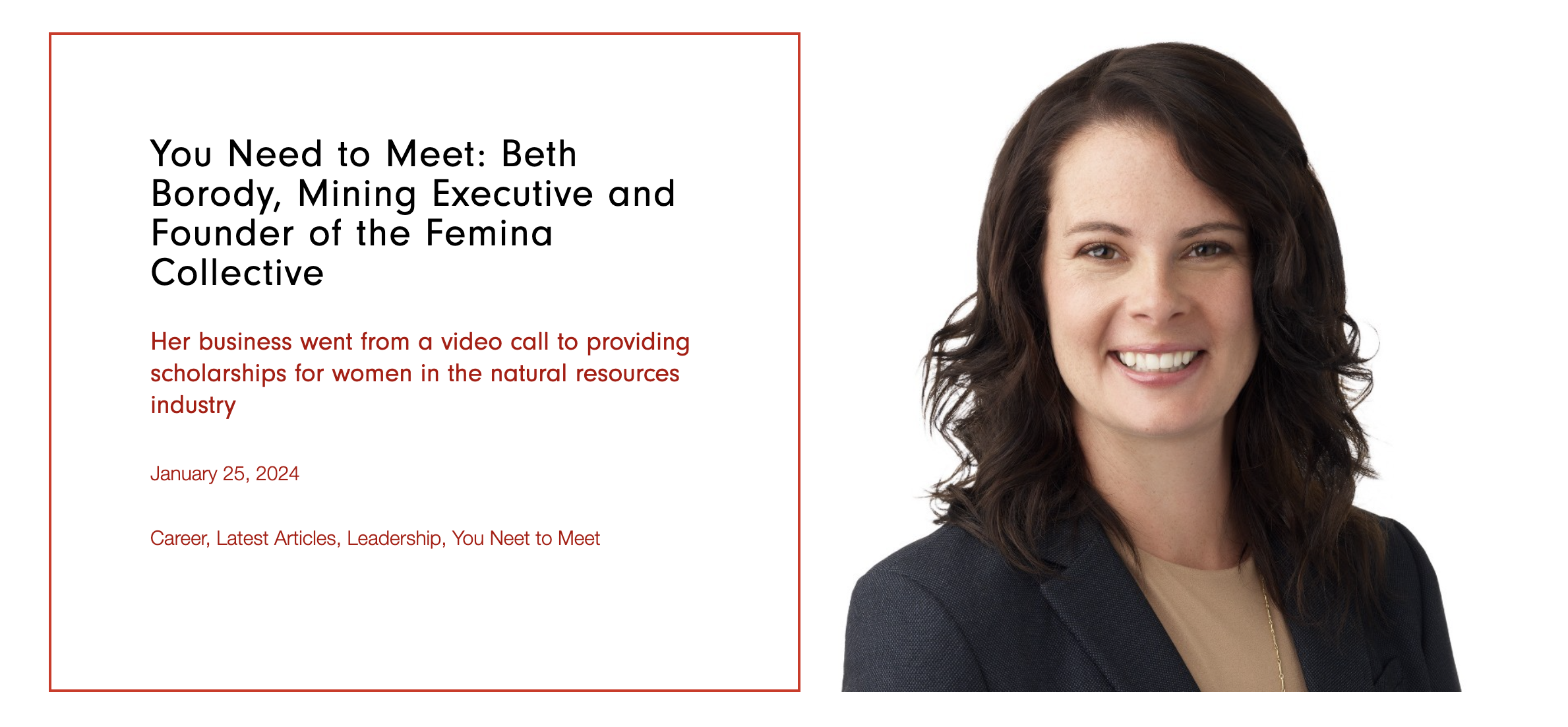
Influencing the Future: Beth Borody, Founder and CEO of The Femina Collective, Featured on Women of Influence
Discover the visionary leader behind Femina Collective, Beth Borody, as she shares insights on founding the organization, challenges faced by women in the natural resource sector, and her vision for a more inclusive future with Women of Influence.
Beth Borody, the visionary Founder and CEO of The Femina Collective, has been recognized for her exceptional contributions to the natural resource sector and her unwavering dedication to advancing women's roles within it. This prestigious acknowledgment comes from Women of Influence (WOI+), an organization committed to empowering women through connections, support, training, and tools.

About Women of Influence (WOI+)
At WOI+, the commitment is clear: to equip women with the means to carve new pathways, excel within their careers on their terms, and drive transformation in the world of work. WOI+ focuses on making meaningful and impactful change, measuring influence by the impact, ripples, and doors opened. It's a community where women with diverse expertise and innovative ideas converge to create a future where women-led leadership thrives.
Beth Borody's remarkable journey as a mining executive and her dedication to transforming the experience and representation of women in the natural resource sector has earned her a place among the Top Changemakers in Canada, as recognized by the Globe and Mail in 2021. This recent acknowledgment from Women of Influence further solidifies Beth's standing as a key figure driving significant change within the sector.
Interview Highlights:
In a recent interview, Beth shares insights into her entrepreneurial journey, the inspiration behind Femina Collective, and the unique challenges women face in the natural resources sector. She reflects on the power of acknowledging what she doesn't know, the importance of embracing curiosity, and the profound impact of Femina Collective on the lives of women in the industry.

It’s obvious Beth expresses being featured in this article with Women of Influence is such an honour. Highlighting the success of Femina and the importance of female representation in mining is critical for creating change. Thank you, Women of Influence, for the opportunity to share our story
"The essence of Femina Collective lies in the incredible women who engage with us. The depth of our conversations, the genuine support shared among members, and the connections formed truly resonate. These interactions transcend typical networking; they foster lifelong friendships and meaningful bonds. This profound impact on individuals and the collective strength it generates is what makes Femina Collective profoundly rewarding and unique."
Looking to the Future:
Beth expresses her excitement about Femina Collective's growth and envisions its expansion beyond North America, driving a transformative movement for women in the natural resource sector. Her aspiration is to see a rise in the representation of women in the workforce, a more inclusive sector, and a pivotal shift marked by an increase in women occupying leadership roles and influencing decisions.
Femina Collective's Impact Beyond:
In its first two years, Femina Collective proudly donated $25,000 in scholarships to women pursuing post-secondary and trade-related programs in the natural resource sector, underscoring its commitment to supporting current members and empowering the next generation.
Beth's Advice to Aspiring Entrepreneurs:
"Follow your intuition and pursue your passions. Trust that inner fire and take action. Build a network of mentors and supporters. Believe in yourself and your potential to make a difference. You have the strength and capability to achieve your goals, so go ahead and seize the opportunity. Trust your gut — it often knows best."
About The Femina Collective:
The Femina Collective, founded by Beth Borody, is dedicated to radically changing the experience and representation of women in the natural resource sector. It serves as a supportive community where women can connect, share experiences, and find support in an industry often dominated by men.
Thank you again to Women of Influence for featuring our incredible Founder, Beth Borody and highlighting what makes Femina Collective such a special initiative. Please read the full interview by clicking here
For media inquiries, please contact:
Peggy Bell | Interm Lead | peggy@thefeminacollective.com

Empowering Reads for 2024: A Femina Collective Booklist
Welcome to a new year full of growth, empowerment, and transformation opportunities. At Femina Collective, we believe in the power of knowledge and how a good book can impact your personal and professional journey. To kickstart 2024, our team has compiled a curated list of five books that align with the goals and aspirations of the Femina Collective community. Let's explore these empowering reads that will inspire you to take charge of your life.

Recommended by Carmen, The Big Leap by Gay Hendricks is more than just a book; it's a yearly ritual. Carmen introduces us to the notion of a "happiness threshold" – that invisible barrier holding us back from our true potential. Hendricks provides actionable insights to identify and overcome limiting beliefs, urging us to take the "big leap" into a life beyond our comfort zones. As Beth Borody puts it, this book is short yet impactful, prompting us to venture beyond our zones of excellence.

Jenna Kutcher’s How Are You, Really? speaks to the heart of every woman striving for balance in a chaotic world. It's a personal invitation to confront our emotions and rediscover our authentic selves. In a world that often demands us to be many things, Jenna Kutcher’s book provides a guide to understanding what's truly going on in our heads. Join us on a journey of self-reflection, acknowledging that it's okay not to be okay, and finding joy amidst life's challenges.
“ It’s easy to get into an automatic mode of doing and producing without stopping to really ask ‘how are you really?’ And answering that question honestly. As women we can move at a mile a minute and when we take the time to slow down, reflect, and simply be we allow ourselves to answer this question honestly and openly. ”

We know there is a gap with women in leadership, which needs to be closed and fast. The Authority Gap looks at what would happen if more women were in leadership positions and the benefits to any company that focuses on promoting women to the highest level. Mary Ann Sieghart’s The Authority Gap sparks necessary conversations about the unseen biases that persist in our lives. It’s an eye-opener that challenges us to think about the roles society assigns based on gender. This book doesn’t just inform; it provokes thought and inspires action. As we explore its pages together, let’s confront the biases we encounter and collectively strive for a more equitable world.

This book, born from the experiences of over 70 women in The Judy Project, is more than just a collection of stories; it's a roadmap for ambitious women aiming high in both their personal and professional lives. As we delve into the narratives of these women, let’s draw inspiration from their journeys – the struggles, the victories, and the wisdom gained along the way. This book is an opportunity to learn, share, and empower one another on our paths to leadership.

In Atomic Habits, James Clear becomes our guide in the journey of habit formation. Do you struggle with habits that seem impossible to break or find it challenging to instill positive changes? Clear's book is not just a manual but a companion, offering a deep understanding of why habits matter and how we can leverage them for a better life. Together, let’s explore the science behind habits and discover how they shape our personal and professional growth.
As we embark on this literary journey together, these five books are not just words on pages; they are companions, mentors, and friends guiding us through the highs and lows of the coming year. Let’s make 2024 a year of shared growth and collective empowerment through the wisdom of these exceptional authors.
2023 Year End Reflections
As the curtains draw close on another remarkable year, I find myself filled with gratitude and awe, reflecting on the incredible journey Femina Collective has undertaken. This year has been a testament to the power of community, resilience, and the unwavering spirit of women within the Natural Resource space.

When Femina Collective was created, there were uncertainties hanging in the air. Would women recognize its value? Would it gain traction? Would we even have members? Amidst the myriad of questions, one thing stood crystal clear – the innate desire of women for safety within a community. The core essence of Femina Collective has always been to provide that haven, fostering connection and growth.
At its heart, Femina Collective is a force, radically changing the experience and representation of women in the Natural Resource sector. We achieve this by cultivating a space where women can unite, confronting both the triumphs and challenges collectively. Our focus is unwavering – ensuring that each member evolves into the best version of themselves. Femina is more than an organization; it's a dynamic engagement, a network of support, and a journey of shared connections.
As we bid farewell to 2023, we also celebrate the culmination of our second year as a community, marked by phenomenal growth. Our membership base doubled, and our footprint expanded into Europe and the United States. The interactions among our members flourished through our dedicated Slack channels and engaging events.
A highlight of the year was our Mexico Retreat, where 18 women delved deep into introspective sessions with our coaches. The experience was a perfect blend of meaningful discussions, culinary delights, socializing, and genuine face-to-face connections. Recognizing the significance of in-person events, we actively participated in key industry gatherings, such as hosting a public dinner at PDAC and attending the Canadian Mining Hall of Fame annual awards dinner, making waves as a united force of women.
The year concluded with impactful dinners in Vancouver and Toronto, bringing together over 50 women witnessing the growth of our community. The connections forged during these gatherings were instant, reinforcing our belief that magic happens when women unite.
A source of immense pride is our Femina Scholarship program, funded by 20% of membership fees. This year, with the support of corporate sponsor Mayhew Performance, we awarded two $5,000 scholarships, bringing our two-year total to $25,000 for five deserving women.
Additionally, ten of our members graduated from the ACE Board Training Program for women, positioning themselves for the next stage of their careers and board appointments.
Individually, our members achieved remarkable milestones – switching roles, earning promotions, voicing their desires and seeing them fulfilled, receiving awards and recognition, and even speaking at TEDx events. Their shared moments of triumph centred around finding their voices, building confidence, and feeling empowered within the Femina Collective community.
As we express gratitude for the incredible journey so far, we eagerly anticipate the dawn of 2024. Our membership will reopen in January, with the goal of welcoming 40 new members. We invite you to join us on this empowering journey as we continue to shape the future of women in the Natural Resource space. Thank you to everyone who has followed our journey, and here's to an exciting year ahead!
-
Femina Collective is a membership based community of like-minded women who believe that we can radically change the experience and representation of women in the Natural Resource space. Join us in 2024.
-
At Femina Collective, we believe in the power of shared experiences and open conversations for everyone in the Natural Resource industry.
Subscribe to our newsletter

Meet Sarah Nicole, the human behind Optimal Affect
As we near the close of an incredible year, we are thrilled to share some exciting news with you! We've curated a special treat for our Q4 call, and it involves an incredible speaker who is a catalyst for transformation and positive change.
Meet Our Guest Speaker: Sarah Nicole, Founder and CEO of Optimal Affect!
Sarah's journey, passion, and commitment to fostering positive cultures within organizations have made her a trailblazer in the realm of human resources and organizational development. Her story is one of inspiration, dedication, and a relentless pursuit of creating impactful change.
“I started Optimal Affect on the firm belief that when organizations thrive, individuals find fulfillment and purpose, leading to health and well-being that extends to our communities. By prioritizing workplace culture, employee engagement, and productivity, we unlock the immense potential within organizations, fostering a ripple effect of positive change.”

We had an exclusive interview where Sarah Nicole opened up about her experiences, the driving force behind Optimal Affect, and the impact she envisions for the future.
1. Can you share a bit about you and your journey and what led you to find Optimal Affect?
People have always been my passion and the core of my work. I went to school for social work before focusing my career in human resources and organizational development. Early in my career, I was compelled to understand everything I could about the dynamics between people in organizations, great cultures, and the conditions that enable their success or failure.
I’ve spent time listening to leaders and team members in social services, healthcare, finance, business, arts, mining and trades. I have found that even in the best organizations with the most thriving cultures, there is a pattern of challenges.
Meetings that accomplish little
Change processes that erode trust
Interpersonal conflict or bad feelings
Lost passion and untapped strengths
It doesn’t have to be like this! That’s why I founded Optimal Affect. So that I can use my experiences, knowledge and strengths to help with transformational change. Why “Optimal Affect” and not “Effect”? Because “Affect” represents the active ability we have to create impact. Rather than passively just taking what’s thrown our way.
2. What sparked your passion for working with people and fostering culture change?
It’s the ripple effect of good that’s so important to me. I started Optimal Affect on the firm belief that when organizations thrive, individuals find fulfilment and purpose, leading to health and well-being that extends to our communities. By prioritizing workplace culture, employee engagement, and productivity, we unlock the immense potential within organizations, fostering a ripple effect of positive change.
Successful facilitation takes a great deal of presence to see and hear underlying needs and then take intentional action. These are the tools I bring to my facilitation practice. I have learned to create the conditions that enable groups and organizations to thrive.
I think a big part of the challenge that exists in groups is building alignment. Moving from competing priorities to a place of understanding our common interests and being able to chart the path forward. So my work becomes a lot about how I can make collaboration easy—a positive, fun and energizing experience. I really believe “no one knows everything, but together we know a lot”, so my goal is always to help groups unlock their collective intelligence and potential.
3. What does a human-centred approach to culture change entail, and how does it differ from other methods?
A human-centred approach acknowledges that systems and organizations are made up of individuals. We can’t create change without that change starting on individual levels. It means putting the people most impacted by a problem or challenge at the centre of the solution finding.
When a leader hires me because they have a toxic culture and it’s impacting productivity or causing a host of other issues, I start by talking to the people. We have to build a shared understanding of the real experiences and needs of the people. We have to make sure they’ve felt heard and understood, and then we can engage them in coming up with solutions. When people are part of the solution-finding, we build commitment and support for the work of transformation. When we impose solutions on people, they almost always fall flat.
4. Can you highlight the importance of building trust and leveraging people's strengths in culture change?
To my point above, I would make the bold claim that no positive transformation is even remotely possible without trust and leveraging people's strengths.
5. What will you be covering/speaking about in the FC Q4 call? What can we expect?
Femina represents a push for radical change. Transformation in the mining sector. I’ll talk about the value of critical reflection in accelerating growth and change. Then guide the group in leveraging your collective intelligence as you reflect on the past year and imagine all the good that is to come.
This is your invitation to a journey of reflection, empowerment, and collective intelligence. Be part of this transformative experience as we navigate the past year and envision the positive change that lies ahead.

The Hidden Costs of Pushing Yourself Too Hard in the Mining Industry
New Blog - The Hidden Costs of Pushing Yourself Too Hard In The Mining Industry

Have you ever found yourself saying, "I am so tired," "I am sick and can't seem to get better," or "I feel so run down"? If so, you are not alone. As women in the mining industry, we push ourselves to the limit every day. We strive to show up in our professional and personal roles, often at the expense of our own health, relationships, and other aspects of our lives. The mining industry is an all-encompassing world that requires us to be on our toes at all times. The constant urgency to prioritize, travel, and work long hours can take a toll on our physical and emotional well-being.
In this blog post, we will explore the hidden costs of pushing ourselves too hard in the mining industry. We will discuss how burnout and exhaustion impact us, the importance of taking a break, and how to redefine expectations in the industry.
One of the hidden costs of pushing ourselves too hard in the mining industry is burnout. Burnout is a state of physical, emotional, and mental exhaustion caused by prolonged stress. It is a common experience in the mining industry, where it can feel like urgent priorities and long hours are the norm. The consequences of burnout are dire. It affects our productivity, our relationships, and our overall well-being. Never underestimate the physical and emotional toll of constantly running on empty.
Another hidden cost of pushing ourselves too hard is our inability to take a break. We often forget that downtime and rest are essential for our physical and emotional health. Taking a mental or physical break from the industry can help us recalibrate, gain new perspectives, and reduce stress levels. Encourage yourself and your colleagues to take a mindful break every now and then. By doing so, you can prevent burnout and improve your overall well-being.
To redefine expectations in the mining industry, we need to prioritize balance. Yes, it is important to be productive, efficient, and meet deadlines, but it doesn't mean that you should sacrifice your well-being. Sustainable success is a better measure for long-term productivity than burning out after a few years. As women in the mining industry, we have to learn to set reasonable boundaries, prioritize self-care, and allow ourselves to take a break when we need it.
In conclusion, pushing ourselves too hard in the mining industry has hidden costs that can affect us in the long run. Burnout and exhaustion can take a toll on our physical and emotional well-being, while our inability to take a break can lead to chronic stress and unhappiness. If we want to redefine expectations in the mining industry and ensure that future generations of women can thrive in this world, we need to prioritize balance, self-care, and realistic expectations. Allowing ourselves and others in the industry to take a break when we need it can take us a long way towards a sustainable and fulfilling career in the mining industry.
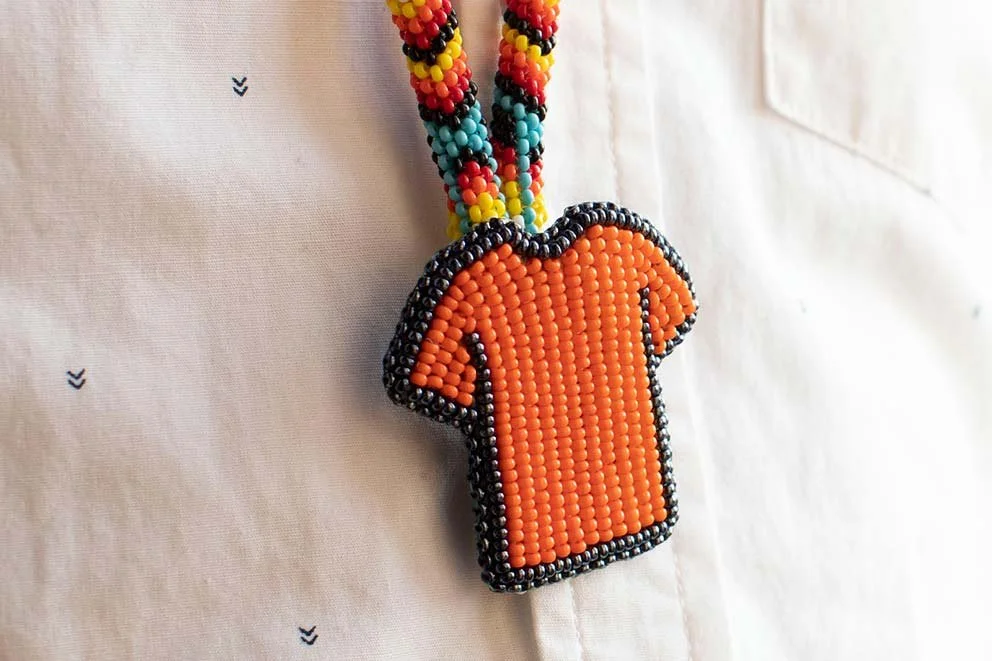
National Truth & Reconciliation Day
My name is Korah De Walt-Gagnon, and I am an inter generational residential school survivor, a member of the Tk’emlups te Secwepemc, and a mother to 3 beautiful children. As an Indigenous woman, National Truth and Reconciliation Day holds a profound significance in my life. It's a day when I reflect on my personal journey from shame and self-doubt to embracing my cultural heritage with pride. It's also a day when I'm reminded of the critical work ahead – educating others to break down bias and misconceptions, ultimately striving for a stronger and more united future for all Canadians because #everychildmatters.
Growing up as an Indigenous girl, I carried a heavy burden of shame. I felt the weight of stereotypes and misconceptions that surrounded my culture. The derogatory labels and misconceived notions about my people cast a dark cloud over my self-esteem and identity. It was as if society expected me to conform to a distorted image of who I should be rather than embracing my true heritage. As a child, I learned that saying I lived down the road from one development in the city was more accepted by adults than saying I lived on the reserve. My skin colour is pale, so I had the privilege of not being stereotyped by the colour of the skin, however, when others found out, I found children made fun of the Indigenous culture and adults passed judgements or assumptions were made.

National Truth and Reconciliation Day, established to honour the survivors of residential schools and acknowledge the deep-seated trauma inflicted upon Indigenous communities, represents a turning point in my life. It's a day of reflection, remembrance, and, most importantly, a day of healing. As I began to learn more about the history and impact of residential schools, it was impossible to ignore the scale of the injustice done to Indigenous peoples. The pain of those who suffered in silence for generations was a painful revelation, but it also ignited a fire within me – a determination to reclaim my heritage and help others understand the truth.
My journey from shame to acceptance was not easy, but it was necessary. It began with a female workshop, one where I allowed myself to be vulnerable with my shame during a breakout activity. Through that experience I left knowing that I can be Indigenous, I can be female, and I can work in the mining industry, but I am enough. Acknowledging the beauty and resilience of my culture and finding strength in the traditions and stories passed down through generations. Healing came as I embraced who I am and showed up as my authentic self.
Breaking down bias and misconceptions is a crucial part of the reconciliation process. To foster understanding and unity, I've taken it upon myself to educate others about Indigenous culture and history. This involves challenging stereotypes, dispelling myths, and engaging in open and honest conversations. It’s important to remember that ignorance breeds prejudice, and prejudice perpetuates injustice. By sharing our stories and our truths, we can dismantle the walls of misunderstanding that have separated Indigenous and non-Indigenous peoples for far too long. Education is a bridge to empathy, compassion, and ultimately, reconciliation.

National Truth and Reconciliation Day is not just about remembering the past; it's about shaping our future. As Indigenous people, we have a rich cultural heritage to share, and as Canadians, we have a responsibility to listen and learn. By coming together, acknowledging the pain of the past, and actively working to bridge divides, we can build a stronger, more inclusive, and more united Canada. The path to reconciliation is not without its challenges, but it's a path worth walking, hand in hand, towards a brighter and more harmonious future.
National Truth and Reconciliation Day represents a pivotal moment in my journey from shame to pride, from self-doubt to self-acceptance. It's a day that reminds me of the power of education, understanding, and unity in breaking down bias and misconceptions. Together, as Indigenous and non-Indigenous Canadians, we can build a stronger future rooted in truth, reconciliation, and respect for all.
What can you do? Many Indigenous people are using their voices and sharing their stories, take the time to register for courses, seminars, and workshops. Support them in their own personal healing journey, while also embarking on your journey of reconciliation.

Flipping the Employment Deficit Conversation
The mining sector has a dwindling talent pipeline. We know this, we discuss this, and we often talk about solving this. Our conversations at association meetings, conferences, and in our teams are often directed at how we are going to employ enough people today to meet our supply and demand needs of tomorrow and how the education programs for geoscience and engineering are becoming watered down or worse, are at risk of cancellation.
These are real concerns and valid conversations. These are conversations that, as a sector, require cross-collaborative solutions. As I am forever the out-of-the-box problem solver, I propose another perspective. Keep reading to find out what it is.

The mining sector has a dwindling talent pipeline. We know this, we discuss this, and we often talk about solving this. Our conversations at association meetings, conferences, and in our teams are often directed at how we are going to employ enough people today to meet our supply and demand needs of tomorrow and how the education programs for geoscience and engineering are becoming watered down or worse, are at risk of cancellation.
These are real concerns and valid conversations. These are conversations that, as a sector, require cross-collaborative solutions. As I am forever the out-of-the-box problem solver, I propose another perspective.
We need to attract more communicators to the sector.
Communicators focus on developing messaging, creating alliances, and creating synergies. We naturally look at problems from different angles, and due to our nature, we talk a lot. We distill the technical into the accessible and create relationships to progress projects.
Story-time:
When working with service providers, site visits were one of the most important aspects of my job. As a talent focussing on growth, these visits helped me contextualize what we were attempting to execute and, even more importantly, understand the pressures my colleagues at sites were experiencing daily.
Why is this important?
To communicate effectively to our target and to implement or grow services, we need to have context. Understanding the footprint of a lab helps to develop the story of how we build it. Seeing the pressures of the talent in the lab helps to understand the staffing levels required to operate it safely. It creates trust in our teams and deepens our communication of how our clients will benefit from the service.
To further the story, I talked with a colleague visiting a site and staying close to one of our commercial facilities. It came up that they would not see the facility because they weren’t sure of its value.
I was baffled - site visits in a growth role, which I was in and was this person, are the most critical part of the job.
How does this relate to mitigating the talent deficit?
Communicators will develop the story of why mining is an essential part of society, how it is a sector of adventure, and why it can be one of the most rewarding sectors in which one can grow.
Furthermore, we build trust. We speak to our communities, stakeholders, and rights holders about our plans and operations. We can push leadership to talk with authenticity and vulnerability, which leads to trust. We help prepare leadership to speak to prospective talent and actively search out new ways for our organizations to become more involved with outreach and advocacy. When combined with first-hand experience on-site, we can provide a deep and realistic understanding of what roles require and what our careers can provide.
Finally, we are natural collaborators. We can develop cohesive and strategic messaging by getting communicators in a room attached to owners/operators, associations, and service providers. For the mining sector to thrive, a strong message across many participants helps to reinforce the message. We understand communication channels and how to reach people.
Solving significant challenges, with the talent deficit being one of the most prevalent, means having different points of view. The sector should focus on more than just the traditional technical talent requirements and take a 360-view of how to reach new participants. At your association meetings, conferences, and board rooms, ask how different, non-traditional roles can help to solve these challenges. Look outside the box, engage new thinkers, connect, and develop communications. At this point - what do we have to lose?

Breaking the Taboo: Fertility, Family Planning, and My Journey to Success
Let's talk about a topic that's been kept in the shadows for far too long - fertility and family planning. As women, we face the challenge of balancing our desire to have children with the demands of our careers. It's about time we shed light on the struggles and triumphs that many women and families face while trying to expand their families.
Let's talk about a topic that's been kept in the shadows for far too long - fertility and family planning. As women, we face the challenge of balancing our desire to have children with the demands of our careers. It's about time we shed light on the struggles and triumphs that many women and families face while trying to expand their families. I would also like to recognize that this post comes from my experience and my desire to have a family. Many women choose not to have children and that experience and decision should be respected without caveats of ‘one day you’ll change your mind’ or ‘once you settle down you’ll want children.’ Whether women want children or not, their choice should be respected as final.
I, Beth Borody, the Founder of Femina Collective, want to share my personal experience with fertility and career growth over the past five years. My goal is to raise awareness and amplify the voices of women who are going through the same challenges.
Eight years ago, I found myself seven months pregnant with my son, despite being told that I would never conceive naturally. He brought immense joy to my life, a happy and healthy child. Six years ago, however, I experienced the heartbreak of an ectopic pregnancy that led to an emergency surgery due to internal bleeding. The road to growing my family wasn't easy.

Five and a half years ago, my husband and I stepped into our first fertility clinic with high hopes. Given that I had already had a child, the doctors assured us that our case would be a breeze. Little did we know the rollercoaster ride that awaited us. At the same time, I was diving into the mining sector, embarking on a new chapter in my career.
Despite the significant impact fertility had on my life, I chose to keep it hidden from my professional circle. I didn't feel the need to share my struggles openly. Battling fertility issues takes its toll on every aspect of a woman's life - the uncertain timelines, endless procedures, emotional pain, constant appointments, and difficult medications.
As my career soared and I climbed the ladder, I realized the increasing need to conceal my fertility journey and desire for a larger family. I witnessed women going on maternity leave, only to have their roles reassigned (albeit informally) to others. I heard the audible sighs from men (and women) in the room whenever another woman announced her pregnancy. Hiring decisions were made based on the likelihood of a woman getting pregnant. It was clear that I needed to keep it a secret, adding an incredible amount of stress to an already overwhelming journey. Fertility became a full-time job that often clashed with the travel expectations of my professional role.
For 18 long months, we put our fertility plans on hold so that I could focus on my career. Juggling both seemed impossible, especially with my constant travel commitments. I wanted to focus on my career and I wanted to grow my career. I knew I wouldn't be able to attend appointments, keep medications safe, or inject myself while constantly being on the road. And for a period of time, that was ok for me. It wasn't until the COVID-19 pandemic hit, allowing remote work and restricted travel, that I saw an opportunity to reignite my fertility journey.
Over the past two and a half years, I've faced numerous challenges while simultaneously progressing in my career and pursuing fertility treatment. Failed IUIs led us down the path of IVF. I underwent an egg retrieval, two polyp removal surgeries, and two frozen embryo transfers. Finally, in April of this year, my perseverance paid off - I became pregnant.
The hormone injections took a toll on my body, making me forget what it felt like to be normal. Yet, every day, I showed up at work, pretending nothing else was going on, fully focused on my job. I had an egg retrieval one day and was on a plane the next, supporting a board meeting. I underwent a polyp removal surgery, only to hop on a flight the following day for an investor tour. I discreetly slipped out of dinners and meetings to administer injections on time. And let's not forget the early wake-up calls for fertility appointments, making sure I never missed a workday. It was overwhelming, and it shouldn't have been something I had to hide.
Eventually, I mustered the courage to confide in another executive about my need for a break from travelling because we were embarking on an embryo transfer. I explained my situation, with the caveat that if our embryo transfer was successful, I would only take the bare minimum of maternity leave. Their response was immediate - they mentioned someone in their network who could replace me and asked if two weeks without travel would be sufficient. I took what I could get and knew that I would have to work even harder to prove that pregnancy wouldn't negatively impact my performance. That transfer protocol ended up being cancelled due to another polyp and instead of a transfer I went into 2023 with another surgery.

2023 has come with many surprises both positive and negative. Our surgery was followed by new protocols, new medications and four long months, with multiple transfer attempts, before our success in April 2023.
Today, I am five months pregnant with my second child. While I continue to support companies and organizations that I love, I'm also taking the time to prepare for my new baby and allow myself to rest and recharge. I share my story because fertility issues affect 1 in 4 women in Canada, yet it remains a topic shrouded in silence, particularly in our industry. We should feel proud of what our bodies can do and accomplish, both in building families and excelling in our careers. Pregnancy and family planning are natural and are not a hindrance. Supporting women and men going through fertility journeys should be a priority. There are many of us facing these challenges, and being able to speak about them will normalize them and help make a safer place for families in our industry.